Chittara is a traditional folk art form practiced by the women of the Deevaru community in Karnataka’s Western Ghat. Far from being a profession, it is a cultural expression filled with creativity, joy, and beauty. Using natural materials like rice paste for white, roasted rice for black , red earth and Gurige seeds for yellow, they create intricate geometric patterns on the walls and floors of their homes. These designs are not merely decorative; they symbolize life’s significant events—marriages, festivals, and rituals—serving as visual narratives of their cultural heritage.
Passed down through generations, Chittara is drawn free hand with remarkable precision, using brushes made from local *Pundi Naaru* grass. The art form requires an intuitive understanding of symmetry and proportion, reflecting the community’s deep connection with nature, their environment and traditions. More than an art, Chittara is a living expression of identity, preserving the Deevaru community’s legacy through its enduring patterns.
Collaboration : CFRIA x Resham Dor
Chittara’s revival is a unique collaboration between the Center for Revival of Indigenous Art (CFRIA) and Resham Dor. While CFRIA has spent over 20 years preserving Chittara through workshops, showcases, and murals , Resham Dor brings visibility to lesser-known craft clusters across India. Geeta Bhat, the founder of CFRIA, has been working closely with the community and has recently released a book titled *”Deevara Chittara – The Art Form, The People, Their Culture.”.
Together, they create a powerful synergy—expanding the cultural and economic reach of Chittara artists.This collaboration focuses on providing wider market access, building awareness , and developing platforms where the art can engage new audiences—without compromising its ritualistic and symbolic integrity.
The Journey of Chittara Art
The making of Chittara art begins with preparing a surface—traditionally mud walls coated with red ochre soil, though today paper and canvas are also used.
Artists were mostly using natural colours but now using regular paintbrushes to adapt to modern materials. Freehand geometric shapes form the foundation, filled with intricate patterns that symbolize life’s ceremonies and nature’s cycles. Refined lines filled with the symbols , creating a beautiful Chittara painting that honours tradition and community
Motifs
Chittara art is known for its intricate geometric patterns and symbolic motifs, each carrying deep cultural significance. Some of the signature motifs and symbols in Chittara include:
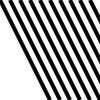
Lines (Ele)
Most important and the central element in all Chittara designs.
Nili
Slanting Lines
Nili Aochhu
Criss Cross Lines
Gombesaalu
Represents children
Goodina Hakki
Slanting Lines
Basinga Nili
Represents the decorative head gear made out of Pith from plant
Meet the Artisans
Behind every rhythmic pattern, every sacred triangle, and every geometric motif drawn with unwavering care, there are hands that have not learned from books or machines, but from the quiet pulse of tradition — passed down in the rustle of sarees, in murmured instructions by firelight, and in the silent watch of daughters learning from mothers..
In the dim light of their mud homes, they bend close to the red earth walls, their fingers moving with practiced grace, rendering designs that celebrate fertility, harvests, and life’s sacred cycles. Each pattern is both prayer and poetry — a visual invocation of community, continuity, and cultural pride.
To witness them work is to glimpse the living soul of Chittara — an art of devotion, womanhood, and the unbroken line of heritage drawn not on canvas, but on the very walls that shelter their lives.
"Each design in Chittara tells a unique story, deeply rooted in our community’s beliefs, rituals, and the rhythm of life itself."